
Linear and curved
Motorised roller conveyors
Motorised roller conveyors are designed to guarantee smooth, safe and automised transport of packages of different dimensions and types.
Thanks to their strong and sturdy structure they ensure reliability and resistence over time, optimising logistic and production processes.
Motorised roller conveyors and their characteristics
- Made to measure: motorised roller conveyors can be made according to specific customer requirements
- Utmost safety: they conform to workplace safety regulations and the EC Machinery Directive.
- Robust: the structures are built with galvanised steel or epoxy powder-coated for better protection.
- Adjustable supports: curved roller conveyors are supplied with adjustable supports making them perfectly adaptable to all work environments.
Uses and advantages
- Optimising logistics: they improve work flow, reduce move time and costs.
- Operational efficiency: they are perfect for production lines, automised warehouses and sorting hubs.
- Reliable over time: high quality materials provide better resistence in the long term.
- Totally versatile: dimensions and technical features can be personalised during quotation preparation.
Why choose Mancini Solutions
Our motorised roller conveyors are the best choice for companies wishing to automate internal package handling safely and efficiently. Thanks to attentive and personalisable design, we offer tailor-made solutions for every situation.
Types
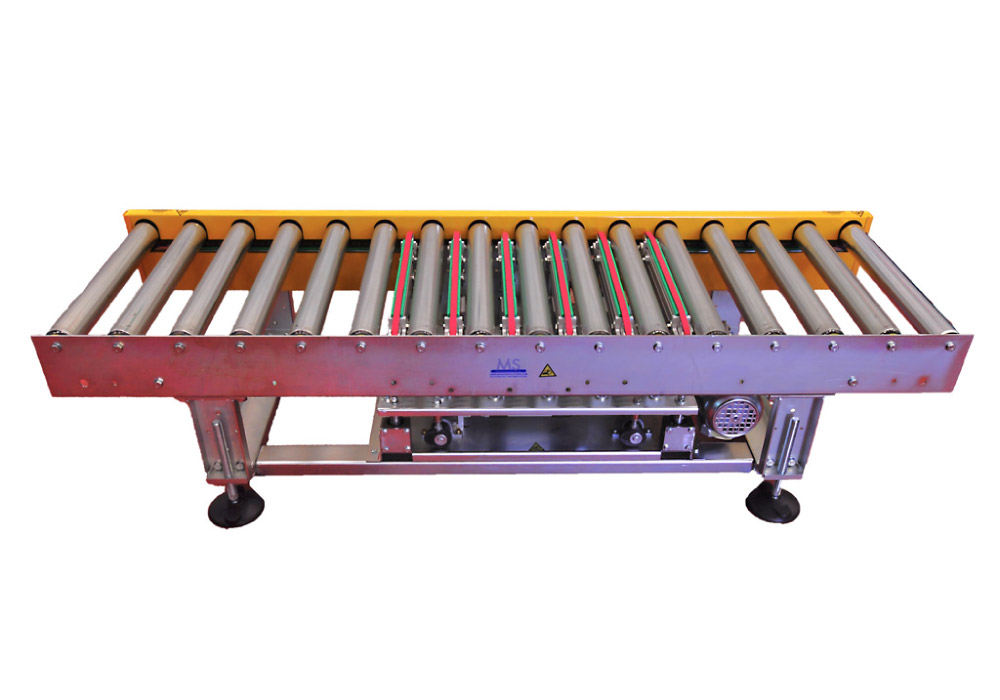
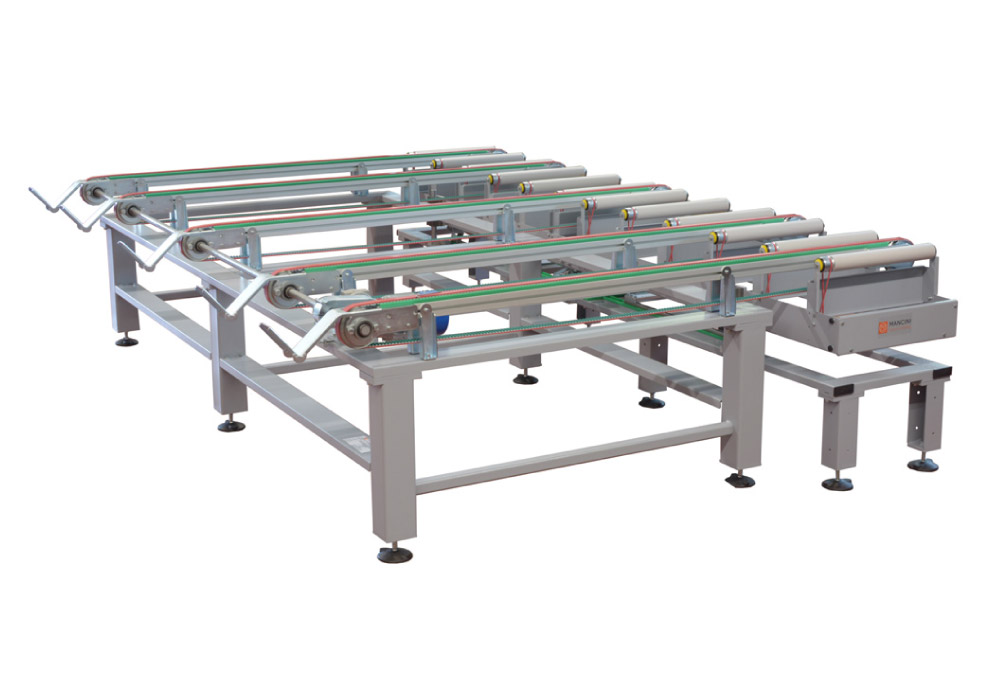
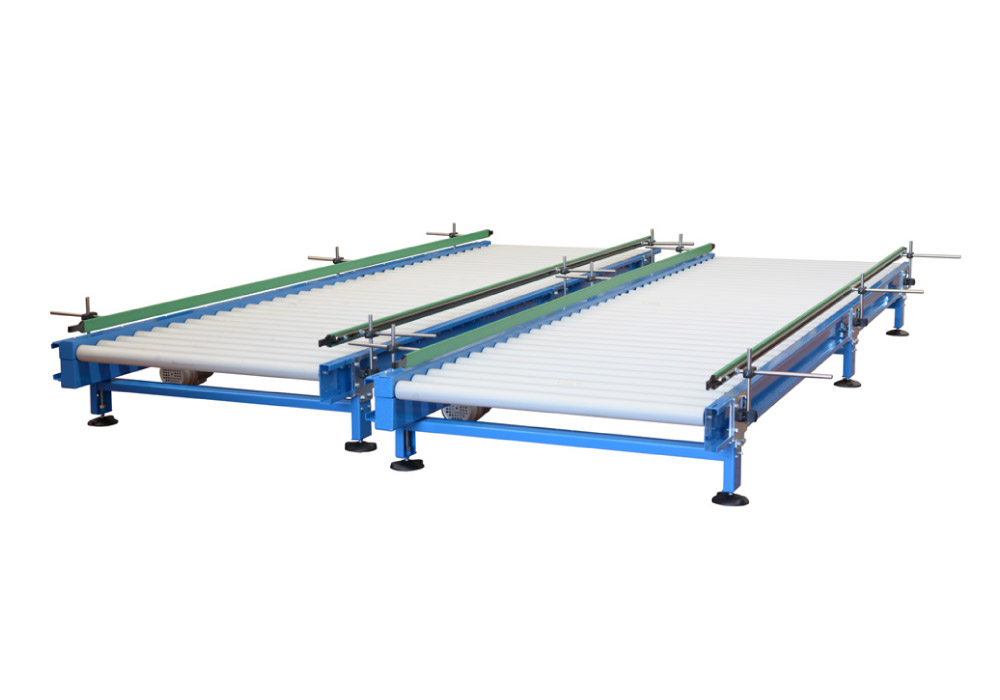
- Motorised/Friction roller conveyors with painted steel chain drive
- Motorised/Friction roller conveyors with AISI 304 stainless steel chain drive
- Light-duty flat belt roller conveyor with standard lengths and widths
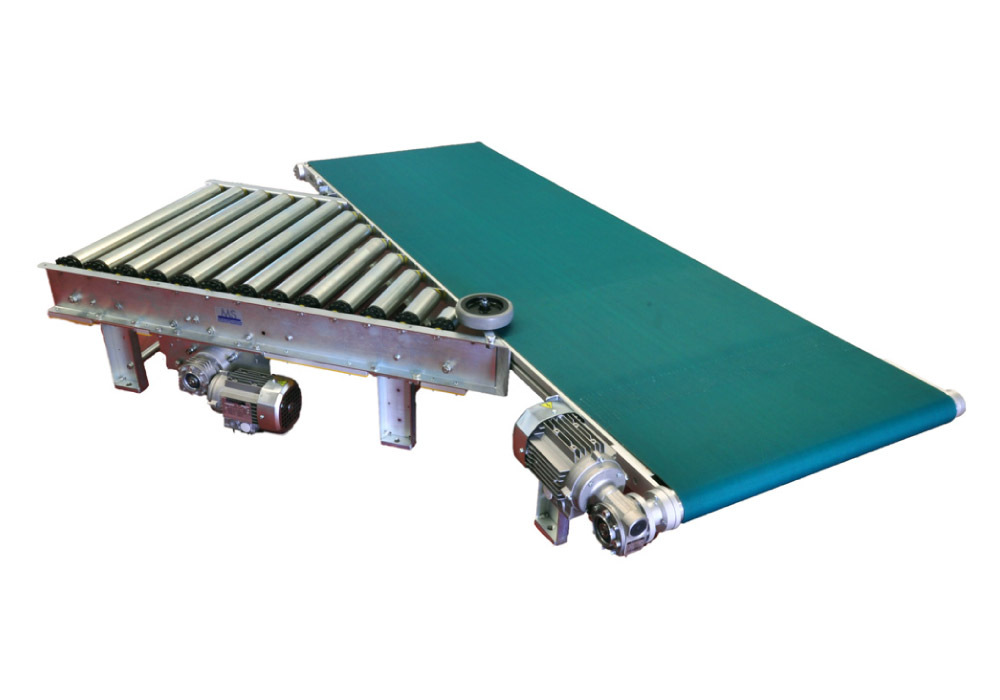
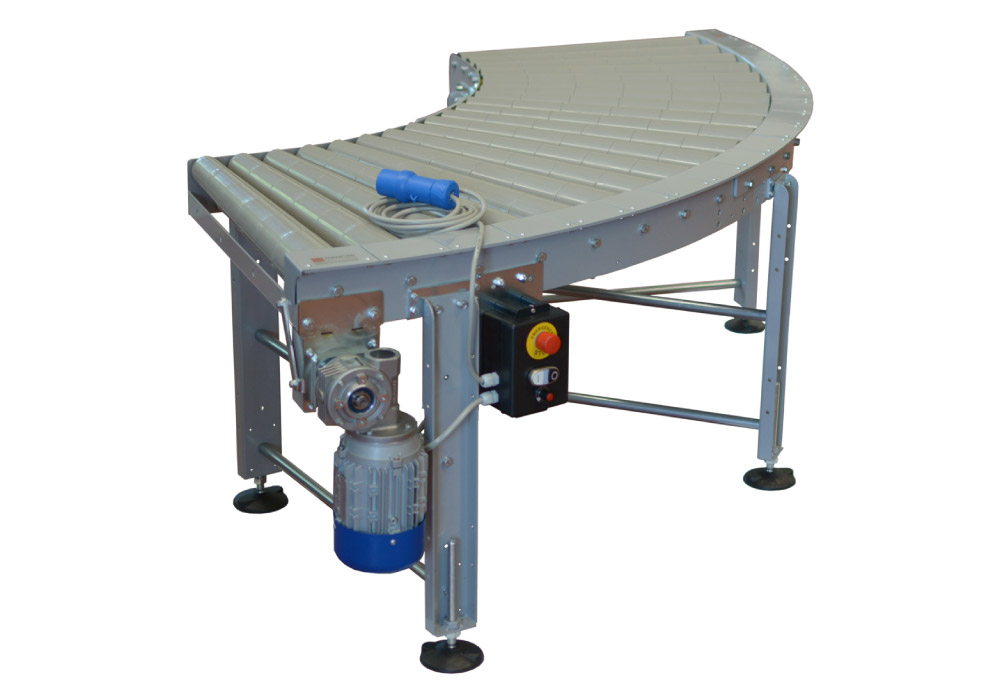
- Motorised curved roller conveyors with plastic or zinc-coated steel rollers
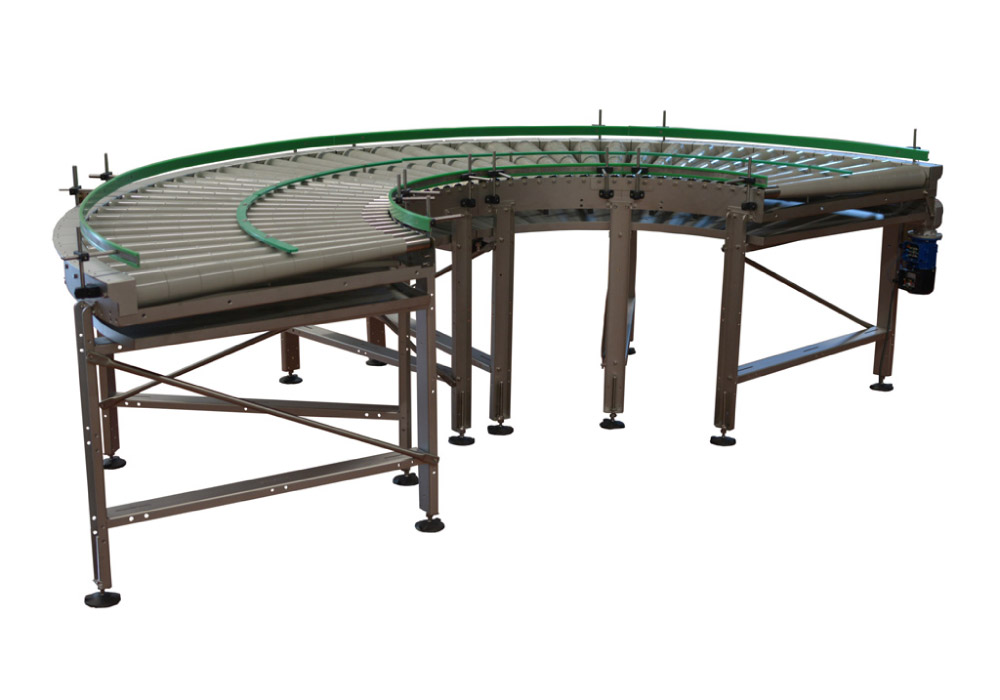
- Motorised curved roller conveyors with plastic rollers and AISI 304 stainless steel structure
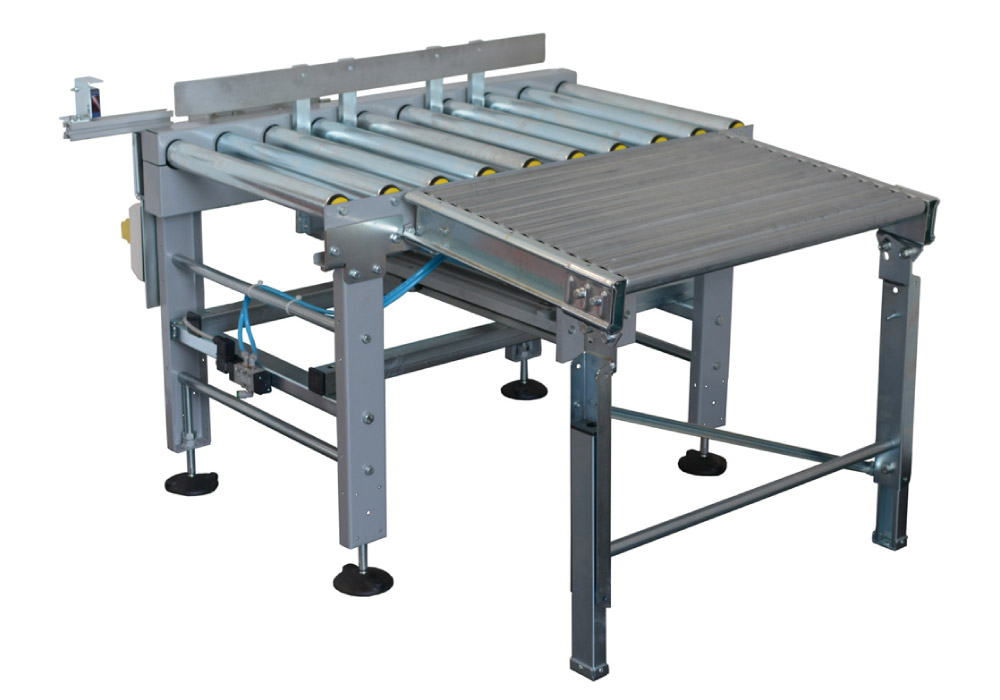
- Motorised 45° roller conveyors for side line entry
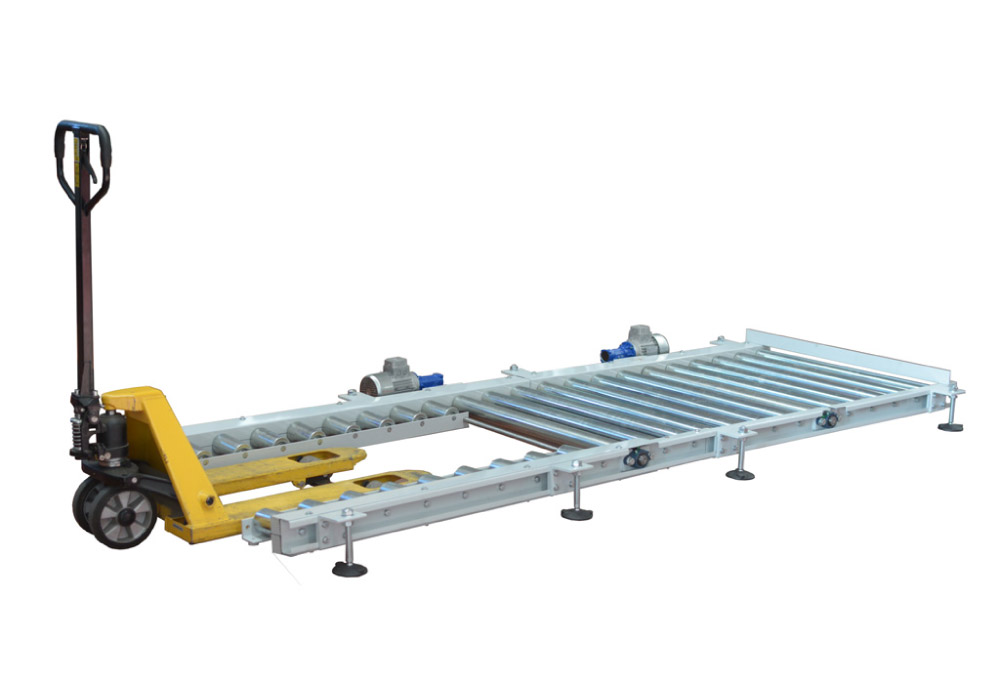
- Heavy-duty motorised roller conveyors for pallet handling
Characteristics
- Weight-bearing structure in AISI 304 powder-coated or stainless steel
- Zinc-, rubber-coated or AISI 304 stainless steel rollers
- Standard widths 400 / 500 / 600 / 700 / 800 mm
- Standard lengths 500 / 1000 / 1500 / 2000 / 2500 / 3000 mm… up to 6000 mm
- Standard roller pitch 69 / 101 / 203 mm
- Chain-drive v-belts or flat transmission belt
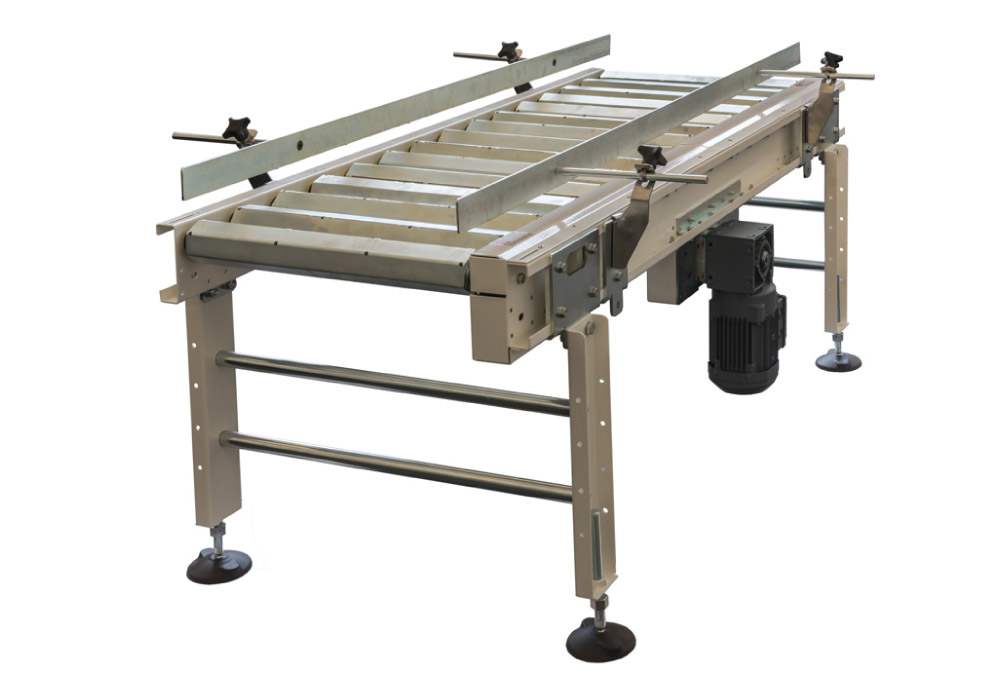
- Support with self levelling and plugable feet
- Motorised/Friction roller conveyors in AISI 304 stainless steel
- Motorised 45° or 90° curves and widths of 400 / 500 / 600 / 700 / 800 / 900 / 1000 mm
Settori di impiego
- Food and Beverage
- Pharmaceuticals
- Manufacturing industries
- Restaurants
- Packaging
- Automations
- Robotics
- Automotive
Accessories
- Control system with overload relay (gear/stop and emergency)
- Speed control inverter (gear/stop/emergency and e potentiometer)
- PLC-based integrated electric system for management of ready-to-use installations
- Adjustable or fixed guides
- Mechanical or pneumatic stop bars
- Pneumatic or electric actuators
- 90° orthogonal diverter with belts
- Dual motor
- Wheels with brakes
- Accessory mounting plates
- Rubber coated and specific rollers according to requirements
- Pneumatic actuators
- Box centering device
Options and customizations
Frequently Asked Questions (FAQ)
1. What are motorized roller conveyors and how do they work?
Motorized roller conveyors are active material handling systems: the rollers are driven by a motor and transmit movement to the product via a chain, round belts (O-rings), or a tangential flat belt, depending on manufacturing requirements.
Unlike idle (gravity) roller conveyors, they do not rely on gravity/incline or manual pushing: the flow is controlled, constant, and can be synchronized with other machinery on the line.
The supporting framework is made of galvanized or epoxy powder-coated steel, or AISI 304 stainless steel for environments with stricter hygiene requirements.
The rollers can be made of galvanized steel, rubber-coated, or stainless steel, selected based on the product being handled and the production context.
2. What types of motorized roller conveyors does Mancini Solutions manufacture?
Mancini Solutions manufactures various configurations, depending on the drive type, material, and context of use:
- Motorized/friction roller conveyors: with chain drive, in painted steel or AISI 304 stainless steel;
- Light-duty flat belt roller conveyors: in standard lengths and widths;
- Motorized curved roller conveyors: with tapered plastic or galvanized steel rollers, also available in stainless steel versions for the food/pharmaceutical or chemical sectors;
- 45° motorized roller conveyors: for inline side entry (merging);
- Heavy-duty motorized roller conveyors: for pallet handling.
Standard widths range from 400 to 800 mm, and lengths from 500 mm up to 6,000 mm, with a roller pitch of 69, 101, or 203 mm. Motorized curves are available at 45° or 90°, with widths ranging from 400 to 1,000 mm.
3. Motorized or idle roller conveyor: when is motorization truly necessary?
Motorization becomes necessary when the path is horizontal or inclined (uphill), when the product is too light or unstable to glide autonomously, or when speed synchronization with other machines on the production line is required.
In more complex systems, motorized and idle conveyors work together: the idle ones handle accumulation and sorting sections, while the motorized ones manage the active sections where precise flow control is needed.
(For a complete technical comparison between the two solutions, see the dedicated section on the gravity idle roller conveyors page).
4. What belts and surfaces are available?
Mancini Solutions motorized roller conveyors can be equipped with various control levels, based on the degree of automation required by the system:
- Control panel with motor protection switch: for start/stop and emergency
- Inverter (VFD) for speed regulation: (start/stop/emergency and potentiometer)
- Electrical system with PLC: for managing turnkey systems
- Dual motorization: for sections with specific traction requirements
- Flow management accessories: such as 90° orthogonal belt diverters, pneumatic or electric pushers, and mechanical or pneumatic package stops.
The configuration is defined during the quoting phase based on the required level of integration with the rest of the line.
5. In which sectors are motorized roller conveyors used?
Mancini Solutions motorized roller conveyors are employed in various production and logistics environments:
- Food, pharmaceutical, and chemical: where easily sanitizable and corrosion-resistant structures are required;
- Manufacturing and automotive: for integration into production lines;
- Catering / Food service: for handling products in controlled environments;
- Packaging: for the automated management of packages at the end of the line;
- Automation and robotics: as a component of systems integrated with other machinery.
6. How is a custom motorized roller conveyor designed?
Each motorized roller conveyor is designed starting from the system’s operational parameters: product weight and dimensions, required speed, available space, the most suitable drive type, and the necessary level of automation.
The roller conveyors comply with workplace safety regulations and the CE Machinery Directive, and are built with adjustable supports for precise adaptation to work environments, including curved configurations.
For a no-obligation technical assessment, you can directly contact the Mancini Solutions team.